
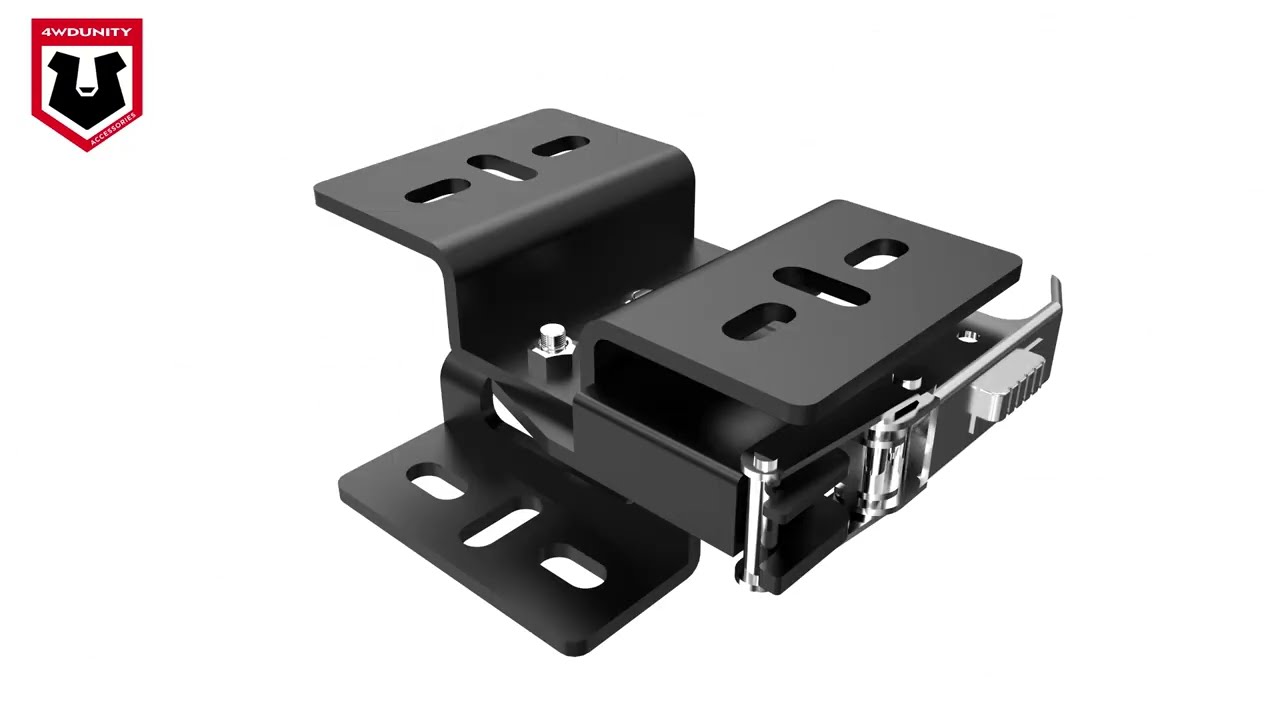
A 4WD roof load rating is quoted as a single number, but most roof top tent problems are not tent problems — they are load problems. A tent plus rack plus two adults plus wind uplift can put three times the static load of the tent alone onto four small mounting points. Here is how to work out what your vehicle can actually carry — and how to mount it so nothing cracks.
The number that matters is not on the tent box. It is in your owner’s manual, in a footnote, and it is almost always lower than what the roof rack manufacturer advertises.
Roof load rating: dynamic versus static load
Every roof has two ratings:
- Dynamic (rolling) load — what the roof can carry while the vehicle is moving. This accounts for bumps, cornering, braking and aerodynamic forces. For most passenger 4WDs it is between 50 and 100 kg. Some wagons are as low as 60 kg; a few utes with reinforced roofs reach 150 kg.
- Static load — what the roof can hold parked. This is usually three to five times the dynamic figure, because there are no dynamic amplifications.
You must design to the dynamic figure, because that is the number you exceed simply by driving to the trailhead. A 70 kg hard shell tent plus a 30 kg steel rack already puts you at 100 kg before you add a single item of gear.
How to calculate your real roof load
Work through this in order and write the numbers down. Do not estimate the tent weight from the marketing page — weigh it, or use a shipping weight.
| Item | Typical weight | Notes |
|---|---|---|
| Roof rack / platform | 22–38 kg | Steel platforms are at the top of this range; aluminium at the bottom |
| Load bars + feet | 8–14 kg | Only if you are not using a full platform |
| Roof top tent (dry) | 55–85 kg | Soft shell at the low end, aluminium hard shell at the high end |
| Bedding left inside | 4–8 kg | Sleeping bags, pillows, a blanket |
| Awning (if roof-mounted) | 12–26 kg | 180° awnings 10–15 kg, 270° awnings 20–28 kg |
| Recovery boards, shovel, jerry can bracket | 5–20 kg | Anything bolted to the rack counts |
Add the column. If the total exceeds your vehicle’s dynamic roof rating, you are already outside the design envelope — and no amount of “it feels fine” changes the fatigue life of the roof gutters or the mounting feet.
Two adults sleeping in the tent adds 150 to 190 kg of static load, which a healthy roof handles. What it does not handle well is that load applied through four bolts at the corners of a tent base, transmitted into two load bars, transmitted into four feet, transmitted into a gutter seam. That is a very concentrated path.
Bar spacing: the specification that gets ignored most often
Two load bars are the minimum and they must be spread far enough apart to resist rotation when the tent is loaded from one side (someone climbing the ladder). The working rule:
- Minimum spread: 700 mm between bar centres.
- Preferred spread: 800–900 mm, set roughly one-third in from each end of the tent base.
- Long tents (over 2.2 m base): use three bars, or a full platform.
- Never mount both bars inside the middle third of the tent — the base will flex and the hinges will take the load.
Bars must also be parallel and level to within a few millimetres. If one bar sits 10 mm higher, the tent base is pre-loaded in torsion before you even open it, and the shell or base frame works against that every time you drive.
Bolts, torque and the 100 km re-check
Almost every “my tent cracked at the mounting point” report traces back to over-torquing an M8 bolt into an aluminium extrusion, or to a bolt that loosened and then wallowed out the hole.
- Use M8 grade 8.8 hardware with nyloc nuts and large-diameter washers (25 mm OD) to spread load.
- Torque to 12–18 Nm into aluminium rails. Into a steel bracket you can go to 20–25 Nm.
- Use a torque wrench. “Two grunts tight” strips aluminium at around 30 Nm.
- Re-check all eight fasteners after the first 100 km, then again after the first 1,000 km, then at every service. Vibration loosens new joints; this is normal, not a defect.
- Add a thread-locker (medium strength) if your rack uses through-bolts rather than channel nuts.
Weight distribution and centre of gravity
A roof top tent is the single heaviest item most people add, and it sits at the highest possible point. Every 50 kg on the roof raises the centre of gravity roughly as much as 150 kg in the boot. Practically:
- Keep the tent centred over the axle line, not cantilevered over the rear overhang. Rear-of-roof mounting increases yaw moment and makes the vehicle nervous on corrugations.
- Load the heavy recovery gear low and between the axles, not in a roof box.
- Check GVM and, more importantly, rear axle load. A tent on the roof plus a full drawer system plus a fridge will often put a dual-cab ute over its rear axle rating before it hits GVM.
- If you tow, remember the tow ball download counts against payload too.
Gutter mounts vs platform vs factory rails
| Mount type | Best for | Watch out for |
|---|---|---|
| Gutter / drip-rail feet | Older wagons and utes with a proper gutter | Gutter seams crack if feet are spread too wide or torqued unevenly |
| Factory roof rails | Modern SUVs, light loads | Rail rating is often lower than the roof rating; check both |
| Full platform / rack | RTT plus awning plus boards | Heavy; still limited by the vehicle roof, not the rack |
| Canopy / tub rack (ute) | Over-canopy tents on dual cabs | Canopy itself needs an internal frame rated for the load |
The rack is almost never the weak link. It is marketed with a 250 kg or 300 kg static rating, which is true and irrelevant — the roof underneath it is rated far lower.
Wind uplift: the invisible load
At 100 km/h, a flat 2.1 × 1.3 m tent lid experiences significant negative pressure. On a roof pod or an open hard shell, uplift can reach 15 to 25 kg per square metre in gusty crosswind conditions. This is why racks should be rated for loads well above the static weight they carry, and why a poorly fitted pod with a small footprint can fatigue a roof over thousands of kilometres.
Mount the tent as far inboard and as low as possible, keep the leading edge above the windscreen rather than overhanging it, and if your tent has a fairing slot, use it.
Five mistakes we see repeatedly
- Using the static rating as the load limit. The dynamic rating is the one you drive on.
- Bars too close together so the base flexes when someone climbs up.
- Bolts overtightened into aluminium, crushing the extrusion and cracking the anodising.
- No re-torque after the first trip, so the tent slowly works loose on corrugations.
- Adding the awning to the same bars without accounting for the cantilever load it applies to the outermost bar.
If you are mounting a tent for the first time, our roof top tent range ships with mounting hardware specified for M8 hardware and a 700–900 mm bar spread, and the OEM team can supply vehicle-specific fitment drawings if you are building a range for a dealership.
Related guides: Hard shell vs soft shell roof top tents · Roof top tent QC checklist