Hard shell vs soft shell roof top tents: after a decade of building both in our own factory and sleeping in them on test trips, the honest answer is that they solve different problems. This guide compares them on the eleven things that actually change your trip: setup time, packed weight, interior volume, condensation, wind behaviour, and repair.
Most buyers start by looking at photos. That is the wrong starting point. A roof top tent is a system of four decisions — shell type, base construction, fabric, and mounting interface — and each one constrains the others. Get the shell type wrong for your vehicle and every trip afterwards feels like a workaround.
Hard shell vs soft shell roof top tents: what the labels really describe
Hard shell means the tent closes into a rigid clamshell: ABS, fibreglass, or aluminium. Gas struts push the lid up and the fabric unfolds as it rises. There is no separate travel cover because the shell is the cover.
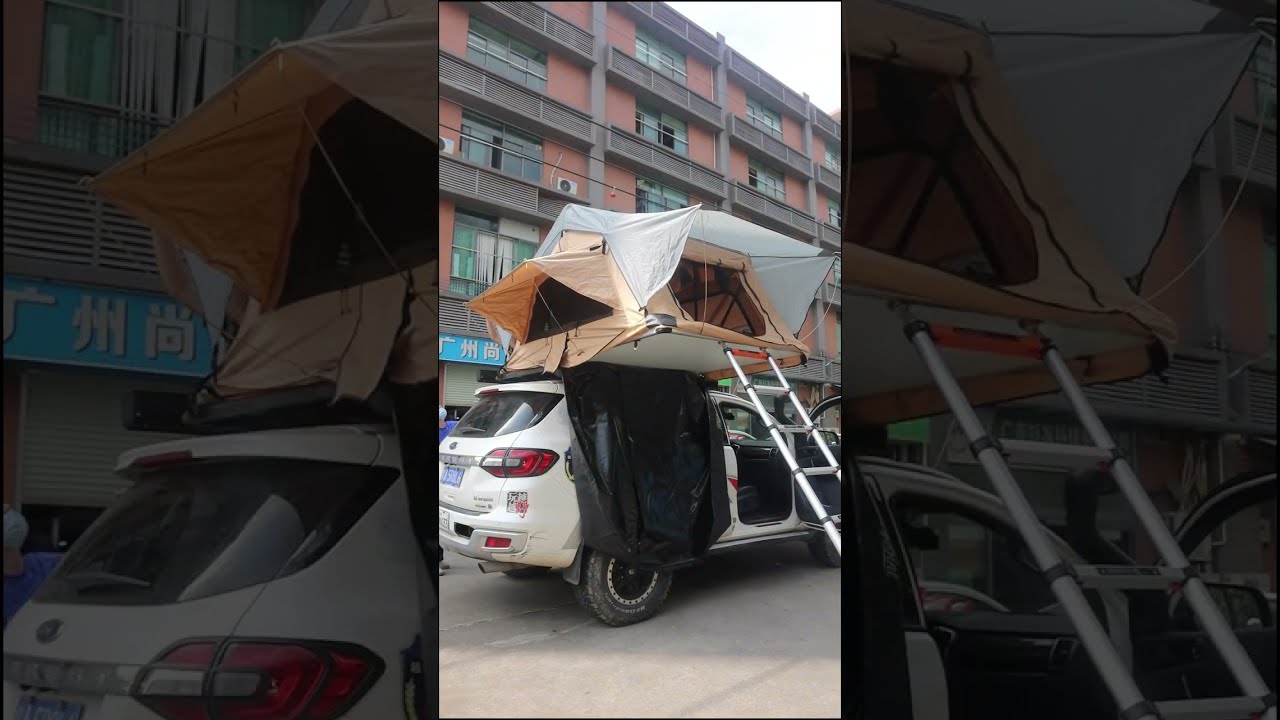
Soft shell means the tent folds into a PVC or canvas travel cover on a flat base, typically opening to one side with a telescopic ladder. The fabric is exposed to the cover on the road, and everything — mattress, bedding, pillows — is compressed inside.
That single mechanical difference drives almost every other trade-off. Here is how they compare on the things we get asked about most.
Setup and pack-down time
Hard shell: 40 to 70 seconds for one person. Unclip two latches, the struts do the lifting, you fold out the ladder. Pack-down is the same in reverse — but you must clear the bedding from the hinge line first, which is where people lose time.
Soft shell: 4 to 8 minutes solo, 3 to 5 minutes with two people. You unzip the cover, pull the ladder out, unfold the base panel, then tension the two or four spring-steel rods, then stake the two awning corners if you want rain protection over the door.
Over a two-week trip with one overnight stop per day, that is roughly 60 minutes of extra work for the soft shell. Over a ten-day basecamp where you pitch once, it is irrelevant.
Packed height, weight and wind resistance
This is where the hard shell wins decisively, and not for the reason most people assume.
| Specification | Hard shell (2-person wedge) | Soft shell (2–3 person fold-out) |
|---|---|---|
| Packed height | 300–380 mm | 280–350 mm |
| Packed footprint | 2100 × 1300 mm | 1400 × 1200 mm |
| Unit weight (dry) | 55–85 kg | 45–65 kg |
| Open floor area | 2.6–2.9 m² | 4.0–4.8 m² (incl. annex) |
| Peak internal height | 1250–1400 mm | 1300–1500 mm |
| Frontal area added to vehicle | 0.42–0.55 m² | 0.28–0.35 m² |
Note the last row. A soft shell packs into a smaller frontal area, which matters for fuel and crosswind stability. A hard shell sits taller and wider, so it catches more air on the highway — expect 0.4 to 0.9 L/100 km extra at 110 km/h depending on the vehicle and roof rack position.
Weight is closer than most people expect. A well-built soft shell with a 320 gsm poly-cotton body, aluminium base frame and 60 mm mattress lands around 58 kg. A comparable hard shell lands around 68 kg — lighter than people assume because the ABS shell replaces both the cover and the frame.
Condensation: the difference nobody mentions in the brochure
Breathing produces roughly 40 to 50 grams of water vapour per person per hour. Over an eight-hour night, two adults put 0.6 to 0.8 litres of water into the air inside the tent. Where that water condenses depends entirely on shell type.
A soft shell has a large fabric surface area with relatively low thermal mass. Moisture condenses on the inside of the fly and, if the tent is ventilated, escapes through the fabric. Add a roof vent and two low-level vents and you can keep the interior largely dry down to about 3 °C.
A hard shell has a rigid, non-breathing lid. Moisture rises, hits the cold underside of the shell, and drips. This is why every hard shell needs either an internal lining, a condensation mat under the mattress, or both. The shell is also more thermally stable, so the dew point problem is smaller — but when it does happen, it happens in one place, directly above your face.
Practical rule: a hard shell is drier in cold weather if it has a lining; a soft shell is drier in cold weather if you open the vents and accept a cooler interior.
Interior volume and living comfort
This is the strongest argument for a soft shell and it is not close. A wedge hard shell feels like a tent-shaped cocoon: fine for sleeping, cramped for sitting up, changing clothes, or riding out a rainy afternoon.
A fold-out soft shell gives you a 2.4 × 1.4 m floor, a vertical wall on the hinge side, and often an annex that adds a covered vestibule. If you travel with two adults plus a child, or you spend more than two nights in one place, the soft shell is the more liveable object.
Wind and weather behaviour
A hard shell is a rigid aerodynamic shape. In a 40 km/h crosswind it is unbothered, and you can leave it up in weather that makes a soft shell unpleasant. Its weakness is ventilation: closed up in a storm, it becomes a condensation chamber.
A soft shell presents a large fabric face to the wind. With the ladder anchored and two guy lines on the windward corner it is stable to roughly 50 km/h; beyond that the fabric starts to drum and the frame loads up. If you regularly camp on exposed coastlines or in the high desert, plan on guying out every time — not just when it is windy at pitch.
Repair and long-term ownership
Soft shell failures are usually fabric failures: a zip, a seam, a pole section, a small tear. All of those are field-repairable in under an hour with a patch kit and a spare pole section.
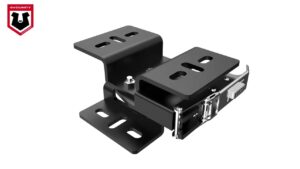
Hard shell failures are usually mechanical: a gas strut losing pressure, a hinge working loose, a latch that no longer pulls the lid down evenly, or a crack at a mounting point caused by over-torqued bolts. Struts and latches are consumables — budget on replacing them every three to five years of regular use. Cracks at mounting points are almost always an installation error rather than a manufacturing one, which is why bar spacing and torque matter so much.
A simple decision rule
- One or two people, moving every day, mostly fair weather, low-profile vehicle: hard shell. The setup time and road manners are worth the lost interior volume.
- Three or more people, or long basecamps, or a wet tropical climate: soft shell with an annex. The floor area and ventilation win.
- Cold-weather camping below −5 °C: hard shell with an internal lining and a condensation mat, or a soft shell with a proper inner tent. Neither works well completely sealed.
- Mixed use, one vehicle: favour whichever is easier to mount and remove alone, because a tent you avoid taking off is a tent you stop using.
What we would check on any sample
Whichever type you choose, four details separate a tent that lasts eight seasons from one that lasts two: the fabric weight (ask for gsm, not “ripstop”), whether the seams are taped rather than just sealed with a bead, the pole wall thickness (1.2 mm minimum for 25 mm aluminium), and whether the base is a welded aluminium frame or an MDF board. The last one is invisible until the third wet trip, when MDF starts to swell.
If you are specifying tents for a dealership or an own-brand range, our OEM/ODM team can walk you through fabric, frame and hardware options against your target market, and our current roof top tent range shows the configurations we build as standard.
Related guides: Roof top tent condensation fixes · 4WD roof load ratings